
“Straight” and “bias” describe the direction of a cut relative to the grain of a woven fabric. The choice changes how a strip behaves in the next operation. It should therefore be decided from the end product, not from the cutting machine alone.
Start with the application
Straight-grain strips follow a principal fabric direction. They are commonly selected when dimensional stability and a consistent direction matter. Bias-cut strips run diagonally across the grain and generally have more give, which can help a strip conform around curves. The exact behavior depends on the weave, fiber and finishing process; test the intended fabric rather than assuming every roll behaves alike.
Plan the preparation step
Before cutting, establish how the fabric is opened, aligned and rolled. A skewed or unevenly tensioned roll makes it harder to maintain a repeatable cut path. Mark the intended direction and finished width on a sample. If the material has a print, nap or one-way surface, include that orientation in the cutting instruction.
Define what leaves the machine
The purchasing specification should state strip width, length or roll form, acceptable edge condition and how strips will be joined or packed. For bias strips, note whether the next process needs stretch or whether that stretch must be controlled during winding. Ask for a sample cut and inspect it after the downstream sewing or finishing step, not only at the cutting station.
Match equipment to the process
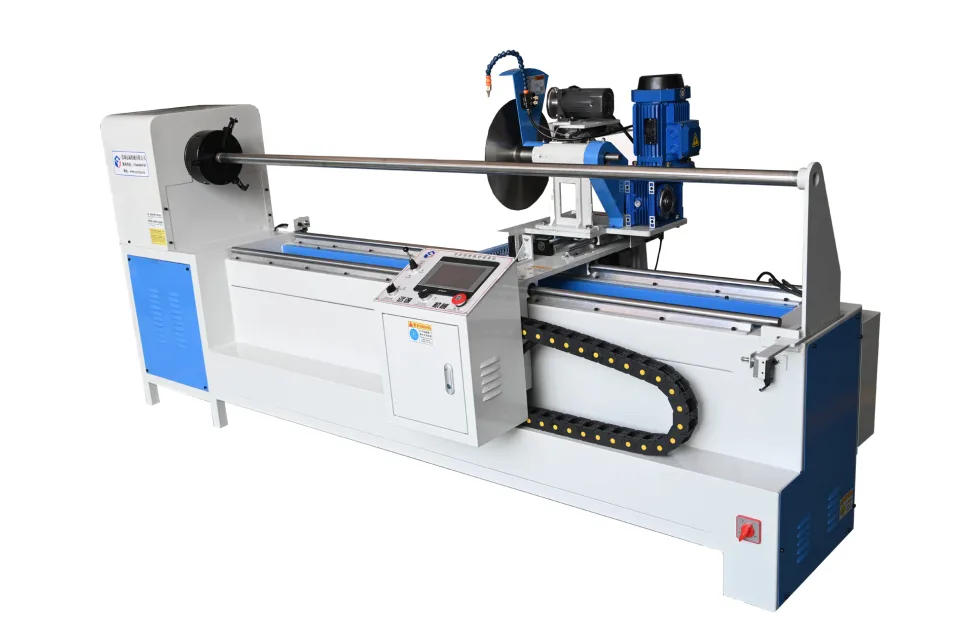
Yuancheng lists the YC-1700A for straight and bias strip cutting and the YC-1800A for straight and bias fabric rolling. These catalog descriptions identify the equipment's intended role; they do not define the right settings for every fabric. Discuss material, incoming roll size, target orientation and output with the factory before selecting a configuration.
A short material trial is often the clearest way to settle the choice. Compare the strip's width and edge after cutting, then see how it performs in the finished product.