
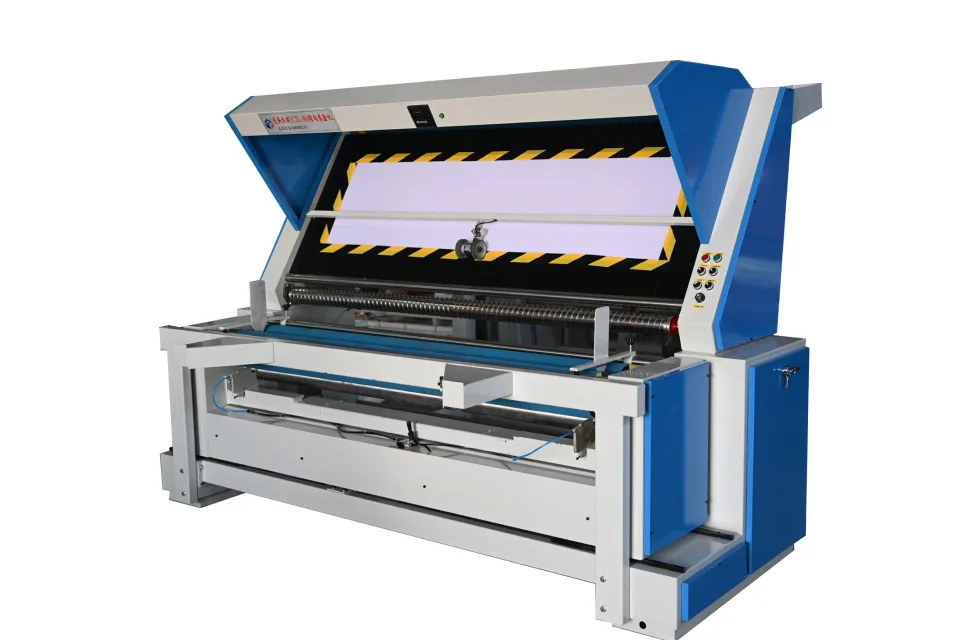
Cutting a flawed roll into many narrow strips can make a small incoming problem harder to trace. A short inspection and rewinding step gives the operator a chance to record the roll condition before it is divided or sewn. The aim is a repeatable handoff, not a promise that one machine will detect every defect automatically.
Identify each incoming roll
Record the supplier, lot, material, nominal width and roll identification. Keep the purchase requirement or approved sample nearby so the operator knows what to look for. Note visible damage to the packaging, core or roll edges before loading.
Inspect at a usable pace
As the fabric passes the viewing area, check for holes, stains, weaving or printing irregularities, color changes and damaged edges relevant to the order. Slow down when a suspected defect needs closer examination. Mark its approximate position and describe it consistently. If your customer uses a formal grading system, apply that agreed method rather than inventing a score during inspection.
Watch the winding result
The inspection record should include how the fabric rewinds. Look for wrinkles, wandering edges, uneven roll build or stretching of sensitive material. If the roll is poorly wound, correct the setup before feeding it into a slitting or cutting process. Tension and alignment should be checked against the material, because a setting suitable for one fabric may distort another.
Make the handoff explicit
Separate accepted material from rolls that need review. Pass the defect locations, usable length or width and any handling notes to the cutting operator. This makes it easier to plan strip widths, avoid known damaged sections and answer a later quality question with a traceable record.
Yuancheng lists the YC-888 as a fabric inspection and rolling machine. If you are planning an inspection step before cutting, share the material, roll dimensions and required inspection method with the team so they can discuss whether this model fits your workflow.