
A rough edge is a useful signal, but it does not prove that a blade needs grinding. Fabric construction, material tension, blade setting and machine condition can all affect the result. A simple inspection record helps the team decide whether to adjust the process, sharpen a suitable blade or replace a damaged one.
Start with a reference cut
Keep a sample of an accepted cut for each important material and strip width. When edge quality changes, compare the new piece with that reference under similar conditions. Record fraying, unevenness, marks or an unexpected change in cutting effort. Note the material lot and machine settings so the comparison is meaningful.
Inspect the blade safely
Follow the machine manufacturer's isolation and handling instructions before a blade is inspected or removed. Check for visible chips, wear or contamination, and record the blade identification and service history. Do not use a fixed sharpening interval for every material; the right decision depends on the edge condition and the manufacturer's limits. A chipped or incompatible blade may need replacement rather than grinding.
Keep the grinding question specific
Ask which blade diameter, mounting bore, material and edge geometry are supported by the grinding equipment. Confirm the permitted grinding method and the minimum safe blade size with the blade and machine suppliers. Avoid copying an angle or sharpening procedure from an unrelated blade. After servicing, verify the blade is correctly installed and run a sample cut before returning to full production.
Connect maintenance to purchasing
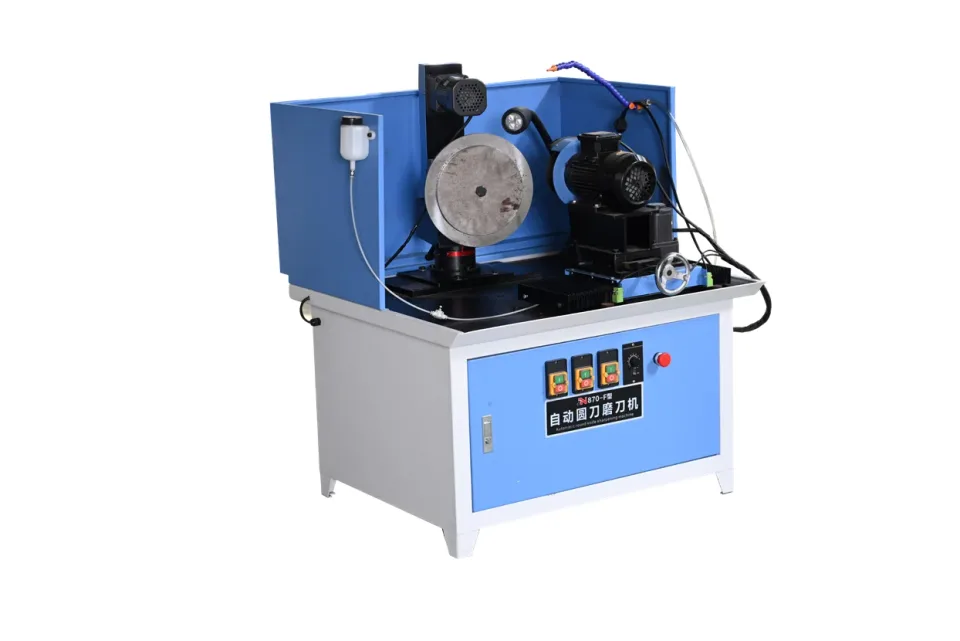
Yuancheng's catalog lists the YC-400 as a circular blade grinding machine. The catalog entry identifies its role but does not establish compatibility with every blade in the market. When asking about the YC-400, send the blade drawing or specification, the cutting machine model and a photo of the edge issue. That information supports a practical discussion about whether grinding is appropriate and what accessories may be required.
A short log of blade condition, actions taken and the subsequent sample result is more useful than a claim that one sharpening frequency fits every production line.